
The United Nations (UN) was founded in 1945 to promote international cooperation, peace, security, and respect for human rights and international law. Its foundational documents, including the UN Charter and the Universal Declaration of Human Rights (UDHR), set universal standards that all member states are expected to uphold. However, the Organization of Islamic Cooperation (OIC), established in 1969 and comprising 57 member states—most of which are also UN members—operates as a parallel international body that often directly contradicts these principles. By creating alternative frameworks for human rights, financial systems, and legal norms, the OIC undermines the UN’s authority and acts as an illegal competitor. This dual allegiance creates inherent conflicts of interest, eroding the UN’s effectiveness. To preserve the integrity of the global order, OIC member states should be expelled from the UN.
The OIC positions itself as the “collective voice of the Muslim world,” with its own charter, institutions, and diplomatic mechanisms that mirror those of the UN.

Headquartered in Jeddah, Saudi Arabia, it holds summits, issues resolutions, and maintains permanent delegations to the UN and other bodies. While cooperation between the UN and OIC is often touted—such as in peacekeeping and humanitarian efforts—the OIC’s actions reveal a deeper agenda: establishing Islamic-specific norms that supersede universal ones. This parallelism isn’t benign; it fosters division and allows member states to selectively adhere to UN principles while prioritizing OIC directives.
Opposition to UN Human Rights Doctrines
One of the most glaring conflicts lies in human rights. The UN’s UDHR, adopted in 1948, enshrines universal freedoms without qualification by religion or culture. In contrast, the OIC adopted the Cairo Declaration on Human Rights in Islam in 1990, which subordinates all rights to Sharia law.

This document explicitly states that rights are subject to Islamic jurisprudence, limiting freedoms like expression, religion, and equality. For instance, it neglects protections for non-Muslims and women, and has been criticized for conflicting with essential UDHR principles. The OIC has pushed this agenda at the UN, notably through efforts to criminalize “defamation of religion,” which challenges freedom of expression and has been seen as an attempt to impose Sharia globally. Such initiatives not only contradict Article 19 of the International Covenant on Civil and Political Rights but also create a parallel human rights regime that OIC states use to deflect criticism of their domestic abuses.
By maintaining membership in both organizations, OIC states exploit the UN platform to advance these contradictory views, weakening global human rights enforcement. Expulsion would force these nations to choose: align with universal standards or isolate themselves in a religiously oriented bloc.
Divergence on International Financial Principles
The OIC also opposes core UN-aligned international financial principles, particularly through its promotion of Islamic finance as an alternative to the global economic order. The UN supports frameworks like those of the International Monetary Fund (IMF) and World Bank, which emphasize interest-based lending, market-driven economies, and transparent financial systems to foster development and stability. In opposition, the OIC advocates for Sharia-compliant finance, which prohibits interest (riba) and promotes profit-sharing models.
While presented as ethical, this system creates parallel institutions like the Islamic Development Bank, which operate outside conventional international norms and can lead to inconsistencies in global trade and aid.
OIC resolutions often critique Western financial systems, viewing them as exploitative and incompatible with Islamic values. This stance indirectly challenges UN Sustainable Development Goals (SDGs), which rely on integrated global finance. For example, OIC efforts to reform international sanctions regimes highlight tensions, as they argue for exemptions based on religious grounds, potentially undermining UN Security Council measures. Such parallelism fragments the international financial architecture, allowing OIC states to bypass UN-endorsed economic policies. Expelling these members would reinforce the UN’s role as the sole arbiter of global financial cooperation, preventing the dilution of its principles.
Conflicts with International Law
Finally, the OIC frequently adopts positions that clash with UN international law, particularly in conflict resolution and sovereignty issues. The UN Charter emphasizes peaceful dispute settlement, territorial integrity, and non-interference, yet OIC actions often prioritize religious solidarity over these norms. For instance, the OIC has granted observer status to entities like the Turkish Republic of Northern Cyprus, contradicting UN Security Council resolutions that condemn its unilateral independence. Similarly, on issues like Palestine and religious freedoms, the OIC pushes agendas that diverge from UN consensus, such as framing hate speech under Sharia terms rather than international standards.
The OIC’s self-perception as a “second UN” for the Muslim world—being the largest intergovernmental organization after the UN—exacerbates this.
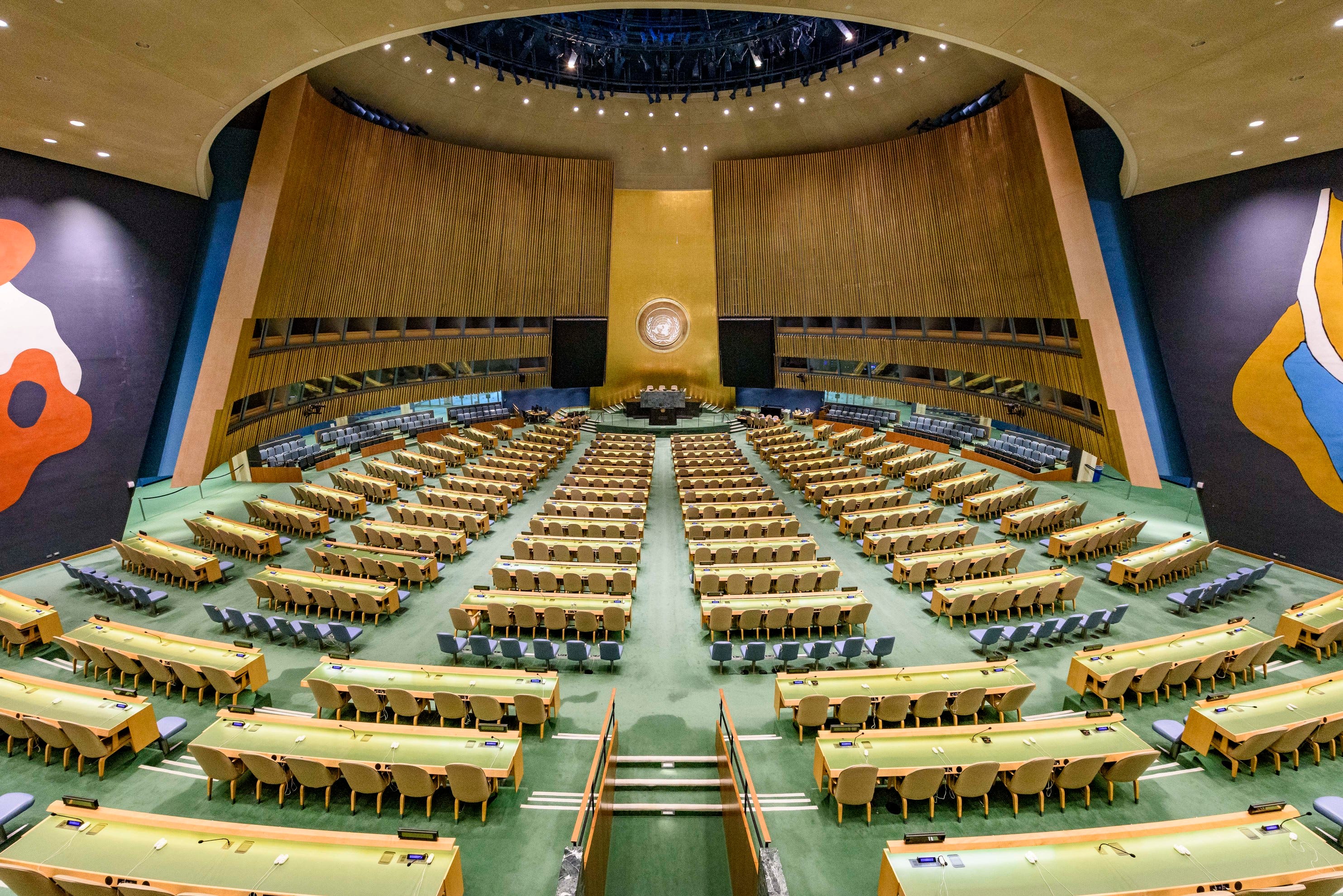
It maintains its own mediation mechanisms and resolutions, creating confusion and competing authority in international disputes. This not only violates the spirit of the UN Charter’s Chapter VIII on regional arrangements but also allows member states to forum-shop for favorable outcomes, undermining global legal coherence.
A Necessary Step for UN Integrity
The OIC’s role as a parallel body isn’t about cooperation—it’s about competition. While UN-OIC dialogues exist, they mask fundamental oppositions that erode the UN’s foundational doctrines. Allowing OIC states to remain UN members perpetuates hypocrisy: these nations pledge allegiance to the UN Charter while adhering to OIC principles that contradict it. Expulsion, though drastic, is justified under Article 6 of the UN Charter for persistent violations of its principles. It would compel OIC states to reform or face isolation, ultimately strengthening the UN as the true guardian of universal values.
In an era of rising multipolarity, the UN must protect its primacy. Expelling OIC members would reaffirm that no parallel entity can subvert the global order without consequences.